
Disclosure: This post may contain affiliate links, which means I may earn a small commission if you make a purchase through these links—at no extra cost to you. I only recommend products and services I personally use or believe will add value to my readers.
Get ready to transform your family’s outdoor adventures by embracing every season! This comprehensive guide helps families plan year-round outdoor activities, from winter skiing and sledding to summer hiking and water sports, with essential gear recommendations and safety tips for each season.
Why Seasonal Outdoor Activities Matter for Families
Seasonal outdoor activities teach children to appreciate nature’s full cycle while building resilience, adaptability, and year-round healthy habits. Families who embrace all-season adventures develop stronger bonds, better problem-solving skills, and deeper environmental awareness than those who limit outdoor time to perfect weather conditions.
Research shows that children exposed to diverse seasonal environments develop enhanced immune systems, improved mood regulation, and greater confidence in handling challenging situations. The key lies in proper planning, appropriate gear, and realistic expectations for each season’s unique opportunities and challenges.
Assessing Your Family’s Readiness
Understanding Your Family’s Seasonal Adventure Profile
- Beginner Families: Start with one primary season, master basic skills, then gradually expand
- Intermediate Families: Focus on 2-3 seasons with increasing adventure complexity
- Nature-Focused Children: Seasonal wildlife observation, photography, gentle exploration
Fitness and Interest Considerations
- Advanced Families: Embrace all four seasons with specialized equipment and skills
- High-Energy Kids: Winter skiing, summer hiking, year-round camping adventures
- Mixed-Age Families: Activities that scale easily (cross-country skiing, beach camping, nature walks)
Winter Family Outdoor Adventures (December-March)
Winter offers some of the most rewarding family outdoor experiences, requiring proper preparation but delivering unmatched beauty and excitement.

Prime Winter Activities for Families
Downhill Skiing: Perfect family bonding with professional instruction available
- Best for: Families seeking structured adventure with amenities
- Gear investment: High ($200-500+ per person per day)
- Skill building: Moderate to high learning curve
- Age range: 3+ years with proper instruction
Cross-Country Skiing: Accessible, affordable, and excellent exercise
- Best for: Budget-conscious families wanting peaceful nature connection
- Gear investment: Moderate ($30-50 rental, $200-400 to purchase)
- Skill building: Low learning curve, quick mastery
- Age range: 3+ years on flat terrain
Ice Fishing: Unique experience combining patience and excitement
- Best for: Families who enjoy quiet bonding and teaching moments
- Gear investment: Moderate ($100-300 for basic setup)
- Skill building: Low to moderate, technique-focused
- Age range: 5+ years with proper warmth management
Winter Hiking/Snowshoeing: Familiar activity adapted for snow conditions
- Best for: Existing hiking families wanting year-round adventures
- Gear investment: Low to moderate ($40-80 snowshoe rental)
- Skill building: Minimal new skills required
- Age range: Any age
Sledding & Tobogganing: Classic, accessible winter fun requiring minimal equipment
- Best for: Any family wanting immediate winter enjoyment with zero learning curve
- Gear investment: Very low ($20-100 for quality sleds)
- Skill building: Minimal – steering and safety awareness
- Age range: 2+ years (with parent supervision/tandem riding)
Family Snowmobiling: Thrilling motorized adventure with technical skill development
- Best for: Families with older children (typically 10+) wanting high-speed winter excitement
- Gear investment: Very high ($100-250 per person for guided tours, $8,000-15,000 to purchase)
- Skill building: High learning curve, requires safety training and mechanical knowledge
- Age range: 5+ as passengers with parent, 10-16+ to operate (varies by state laws and snowmobile size)
Winter Safety Essentials
Temperature Management: Layer systems that adapt to activity level and changing conditions – We love Smartwool Base layers!
Emergency Preparedness: Shelter, fire-starting materials, extra food and water
Communication: Reliable methods to call for help in remote winter locations – We rely on the Garmin InReach.
Weather Awareness: Understanding signs of dangerous weather changes
Terrain Safety: For downhill skiing and snowmobiling families, avalanche awareness training and proper route planning are essential. It’s spendy, but if you’re adventuring anywhere near avalanche terrain, you will definitely want to get an avalanche airbag and all the avalanche rescue essentials – your life is worth it!
Winter Gear Investment Strategy
Start with rentals for expensive items (skis, snowshoes, winter camping gear)
Begin with sledding – the lowest barrier to entry for winter family fun (Check out our family’s favorite tube style sled – SO FUN!)
Invest in quality base layers – the foundation of all winter comfort – We love SmartWool.
Prioritize safety items – helmets (for skiing and snowmobiling), avalanche safety gear for backcountry activities
Buy versatile pieces – clothing and equipment that works across multiple activities
Summer Family Outdoor Adventures (June-September)
Summer provides the longest days, most comfortable weather, and greatest variety of outdoor activity options for families.

Prime Summer Activities for Families
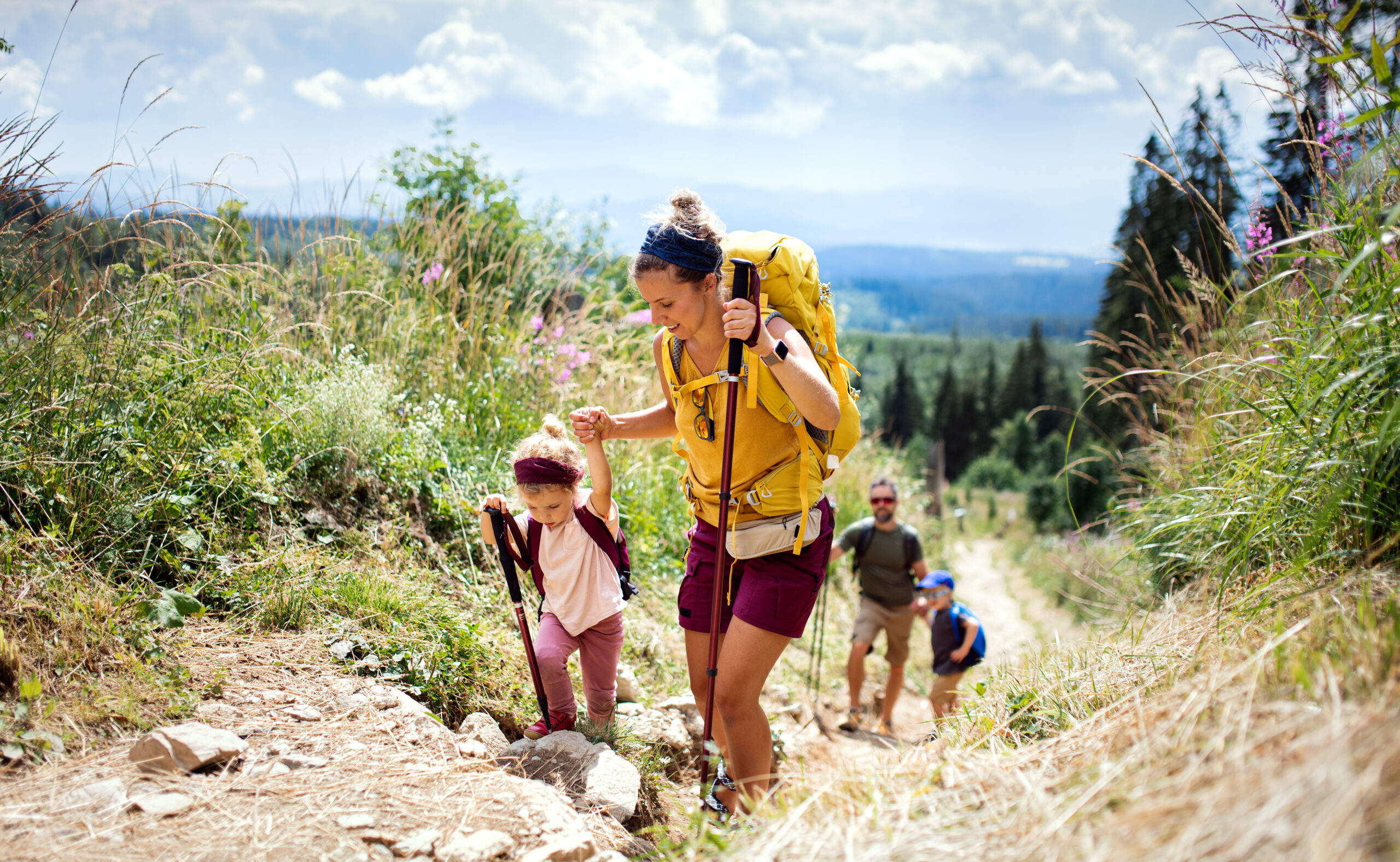
Hiking and Backpacking: Build endurance and wilderness skills in ideal conditions
- Best for: Families wanting to develop outdoor competence and confidence
- Gear investment: Moderate ($200-500 for quality backpacks and footwear)
- Skill building: Progressive skill development over multiple seasons
- Age range: Any age for day hikes, 8+ for overnight backpacking
Water Sports (Kayaking, Swimming, Beach Activities): Cooling relief with skill development
- Best for: Active families near water or willing to travel for water access
- Gear investment: Low to high ($50 day rental to $1000+ kayak purchase)
- Skill building: Varies widely by activity complexity
- Age range: Swimming ability dependent, 4+ for supervised kayaking
Car Camping: Gateway to outdoor sleeping and nature immersion
- Best for: Beginning outdoor families building confidence for backcountry adventures
- Gear investment: Moderate ($300-800 for quality family camping setup)
- Skill building: Low learning curve, high enjoyment factor
- Age range: Any age with proper preparation
Family Biking & Mountain Biking: Scalable adventure from paved trails to technical terrain
- Best for: Families wanting flexibility from easy neighborhood rides to wilderness exploration
- Gear investment: Moderate to high ($200-500 for kids’ quality bikes, $500-3,000+ for adult bikes)
- Skill building: Low learning curve for basic biking, moderate to high for mountain biking trails
- Age range: 1+ (baby/toddler seats on adult bikes), 3+ years (balance bikes/training wheels), 6+ for trail riding, 10+ for technical mountain biking
Summer Fishing: Patient skill-building with immediate reward potential
- Best for: Families wanting quiet bonding time and teaching moments about ecosystems
- Gear investment: Low to moderate ($50-150 for basic family setup, $200-800 for quality gear)
- Skill building: Low to moderate learning curve, lifelong skill refinement
- Age range: 4+ years with close supervision, 7+ for independent casting
Summer Safety Considerations
Heat Management: Hydration strategies, sun protection, activity timing
Wildlife Awareness: Food storage, animal encounter protocols, habitat respect
Water Safety: Swimming abilities, life jacket protocols, weather monitoring
Navigation Skills: Map reading, GPS use, trail marking awareness
Summer Gear Priorities
Sun Protection: High-quality sunscreen, protective clothing, sunglasses for entire family – We love the Avon Sunscreen/Bug Repellent Combo.
Hydration Systems: Water bottles, filtration options, electrolyte replacement – Start by getting yourself a Camelbak hydration pack.
Insect Protection: Effective repellents, protective clothing, shelter options – We wear Picardin daily!
Emergency Communication: Cell phone backup power, emergency signaling devices – We rely on the Garmin InReach.
Transition Seasons: Spring and Fall Adventures
Spring (March-May) and Fall (September-November) offer unique opportunities for families willing to adapt to variable conditions.

Spring Family Activities
Wildflower Hiking: Educational nature walks during peak blooming seasons
Mild Weather Camping: Perfect temperatures for learning camping skills
Stream Fishing: Water levels ideal, fish actively feeding
Photography Adventures: Dramatic weather and lighting conditions
Fall Family Activities
Leaf Peeping Hikes: Spectacular scenery with comfortable hiking conditions
Harvest Season Activities: Apple picking, pumpkin patches, agricultural tours
Migration Watching: Bird and animal observation during seasonal movements
Preparation Activities: Gear maintenance, winter skill practice
Transition Season Challenges
Variable Weather: Rapid condition changes requiring flexible gear and plans
Shorter Days: Limited daylight requiring earlier starts and backup plans
Trail Conditions: Mud, ice, and debris requiring appropriate footwear and caution
Year-Round Gear Strategy for Families
Building a Seasonal Gear Collection
- Phase 1: Establish one season thoroughly with quality equipment
- Phase 2: Add complementary season with versatile, overlapping gear
- Phase 3: Expand to full four-season capability with specialized equipment
- Phase 4: Upgrade and refine based on family preferences and experience
Essential Multi-Season Gear Investments
- Base Layer System: High-quality synthetic or merino wool tops and bottoms
- Shell Layer System: Waterproof, breathable jackets and pants for entire family
- Backpack System: Day packs for each family member, larger pack for group gear
- Footwear System: Hiking boots, water shoes, insulated winter boots
- Safety Equipment: First aid supplies, emergency shelter, navigation tools
Seasonal Gear Storage and Maintenance
- Rotation System: Clean, repair, and store off-season equipment properly
- Maintenance Schedule: Regular equipment inspection and replacement planning
- Size Management: Children’s gear upgrading and hand-me-down strategies
- Space Efficiency: Gear organization systems that accommodate seasonal rotation
Planning Your Family’s Seasonal Adventure Calendar
Annual Adventure Planning
January-February: Plan summer adventures, maintain winter gear, book summer reservations
March-April: Transition to spring activities, prepare summer gear, finalize summer plans
May-June: Peak summer preparation, spring adventures, winter gear storage
July-August: Summer adventure season, early winter planning, gear assessment
September-October: Fall adventures, winter gear preparation, summer gear maintenance
November-December: Winter adventure launch, holiday gear gifts, annual planning review
Monthly Adventure Goals
Set realistic monthly outdoor adventure targets:
- Minimum: One family outdoor activity per month regardless of weather
- Moderate: Two outdoor adventures monthly with seasonal variety
- Advanced: Weekly outdoor activities with seasonal skill progression
Seasonal Skill Development
Winter Skills: Cold weather layering, snow travel techniques, winter safety protocols
Summer Skills: Heat management, water safety, navigation, wildlife awareness
Year-Round Skills: Weather assessment, emergency response, Leave No Trace principles, outdoor cooking
Building Long-Term Seasonal Adventure Habits
Creating Family Traditions
Seasonal Kickoffs: First ski day of winter, first hike of spring, summer camping trip, fall color tour
Annual Challenges: Family hiking goals, seasonal activity completions, skill certifications
Equipment Rituals: Seasonal gear preparation, maintenance sessions, upgrade planning
Documentation Practices: Adventure journals, photo collections, skill progression tracking
Teaching Seasonal Awareness
Weather Pattern Recognition: Help children identify seasonal weather changes and safety implications
Seasonal Wildlife Observation: Track animal behavior changes through seasons
Plant and Ecosystem Changes: Observe how natural systems adapt to seasonal transitions
Human Activity Adaptations: Discuss how families and communities prepare for seasonal changes
Common Seasonal Adventure Mistakes to Avoid
Over-Ambitious Planning
Start with shorter, easier adventures and build complexity gradually. Many families attempt advanced activities too quickly, leading to frustration and safety concerns.
Inadequate Gear Preparation
Each season requires specific equipment preparation. Summer families often underestimate winter gear needs, while winter families may inadequately prepare for summer heat and sun exposure.
Ignoring Weather Reality
Seasonal weather patterns are predictable but variable. Always prepare for conditions worse than forecast and maintain flexible backup plans.
Neglecting Skill Development
Seasonal activities require progressive skill building. Rushing into advanced activities without proper preparation increases risk and reduces enjoyment.
Getting Started: Your First Seasonal Adventure

Choose Your Starting Season
Winter Start: Begin with sledding, cross-country skiing, or snowshoeing/winter hiking for immediate winter access
Summer Start: Begin with day hiking and car camping for gentle outdoor skill development
Spring/Fall Start: Begin with mild weather activities to build confidence before extreme seasons
Essential First Steps
- Research local opportunities within 1-2 hours of home
- Connect with local outdoor communities for guidance and safety
- Invest in basic safety equipment before expensive activity-specific gear
- Start with guided experiences to learn safely and efficiently
- Document your adventures to track progress and maintain motivation
Building Your Seasonal Adventure Community
Local Outdoor Groups: Join family-focused hiking, skiing, or camping organizations
Online Communities: Connect with seasonal outdoor enthusiasts for advice and inspiration
Equipment Sharing: Develop relationships for gear sharing and bulk purchasing
Skill Sharing: Trade expertise with other outdoor families (ski instruction for camping knowledge)
Advanced Seasonal Adventure Progression
Year 2-3 Development
Expanded Activity Range: Add 2-3 new seasonal activities based on family interests
Increased Adventure Length: Progress from half-day to full-day and overnight adventures
Leadership Development: Encourage older children to help plan and lead appropriate activities
Specialized Skill Development: Pursue formal instruction in preferred activities
Long-Term Family Goals
Seasonal Certifications: Wilderness first aid, avalanche safety, water safety instruction
Major Adventure Goals: Multi-day backcountry trips, challenging peak ascents, extensive travel
Teaching Others: Share expertise through mentoring, instruction, or community leadership
Legacy Building: Establish family outdoor traditions that continue through generations
Conclusion: Embracing Year-Round Family Adventures
Seasonal outdoor activities provide families with unparalleled opportunities for growth, bonding, and lifelong healthy habits. The investment in proper planning, gradual skill development, and appropriate equipment pays dividends in family memories, physical fitness, and environmental stewardship.
Start with one season, master the basics, then gradually expand your family’s outdoor capabilities. Focus on safety, appropriate challenge levels, and fun over performance metrics. The goal is building a sustainable, enjoyable outdoor lifestyle that adapts to your family’s changing needs and interests.
Remember: every outdoor family started with a single adventure. Your family’s seasonal outdoor journey begins with the decision to step outside, regardless of weather, and discover what each season offers.
Ready to plan your family’s first seasonal outdoor adventure? Explore our detailed gear guides and activity-specific tutorials to ensure your family has everything needed for safe, comfortable, and memorable seasonal experiences.